Showing posts with label Google. Show all posts

Sunday, February 26, 2012

Google invents original search gestures


Search gesturesIt looks like Google has plans for changing the way we search using our mobile devices. The search engine giant was recently reported to have invented a new gesture for pulling off searches on future Android devices. Instead of users having to waste time selecting words  the traditional way, it will allow them to simply use “continuous gestures” to get the job done. Well how does it work?

In the example given in the patent, users draw the letter “g” on the screen, and continue drawing the tail around (like an “o”) the word they would like to search for. Once they lift their finger from the display, a search is automatically initiated for the circled word. If users want to use another search i.e. Wikipedia or Yahoo!, they can perform the same gesture, but start with the letter “s” instead of “g”. A context menu will pop up instead, giving users the option to select their search engine of choice.
A pretty cool idea if you ask me, and it’s something that will definitely make searching on mobile devices easier and more efficient. No word on when these gestures will be implemented (or if they will even be used) but it’s definitely something to look forward to.

Friday, February 24, 2012

Google glasses coming to stores this year?


A number of anonymous Google employees are reporting that the company is currently developing Android-powered glasses that can provide a heads-up display to the wearer and connect over wireless data services. The glasses will purportedly work like a wearable version of theGoogle Goggles app, providing real time information on a user's location via GPS and motion sensors. Even more surprising, the same sources are saying these "Google glasses" could be available to the public by the end of this year.
The Google glasses have apparently been in production for quite some time at Google's secretive Project X lab, where the company designs its more outlandish projects, such as robots, space elevators, and the like. Anonymous employees have indicated that this is strictly an experimental program from Google, though it may look into future business applications depending on how successful the product is.
Aside from a few buttons on the side, the glasses are said to resemble a regular pair of eyeglasses with a design similar to the Oakley Thumps(pictured below). The glasses will feature a low-resolution camera on the front for gathering information to relay to a small screen built into one side of the lenses. The screen will not be transparent, but will be located to the side of the frame, so as not to obscure a person's view but still give an augmented reality feel. The camera will also be able to take pictures, and have a built-in flash.
Using either WiFi or a 3G/4G connections, the device will tap into Google's cloud and relay information to the user on their environment, including locations or friends nearby and objects that they look at. The glasses will also work as a smartphone, allowing users to make calls, use certain apps, and connect with friends.
Actually controlling the glasses will be a bit unique, as reading through information on the display will require a user to tilt their head to scroll and click. Sources at Google have noted that this function is actually a lot easier to use than it sounds, and will not be noticeable to others.
Unnamed employees told the New York Times that the new Google glasses are expected to be priced much like a current smartphone (in the US$250 to $600 range) and are aimed for a 2012 release date.

Wednesday, October 19, 2011

Droid RAZR: “Impossibly Thin”


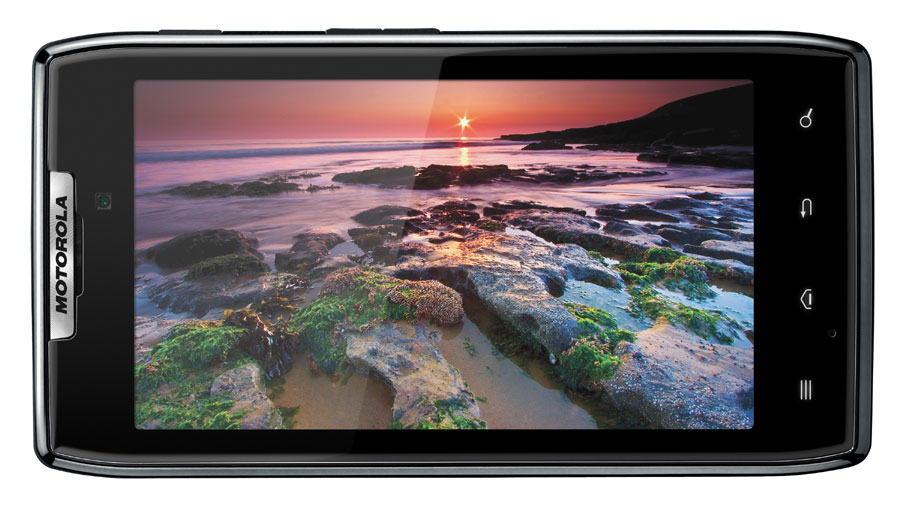
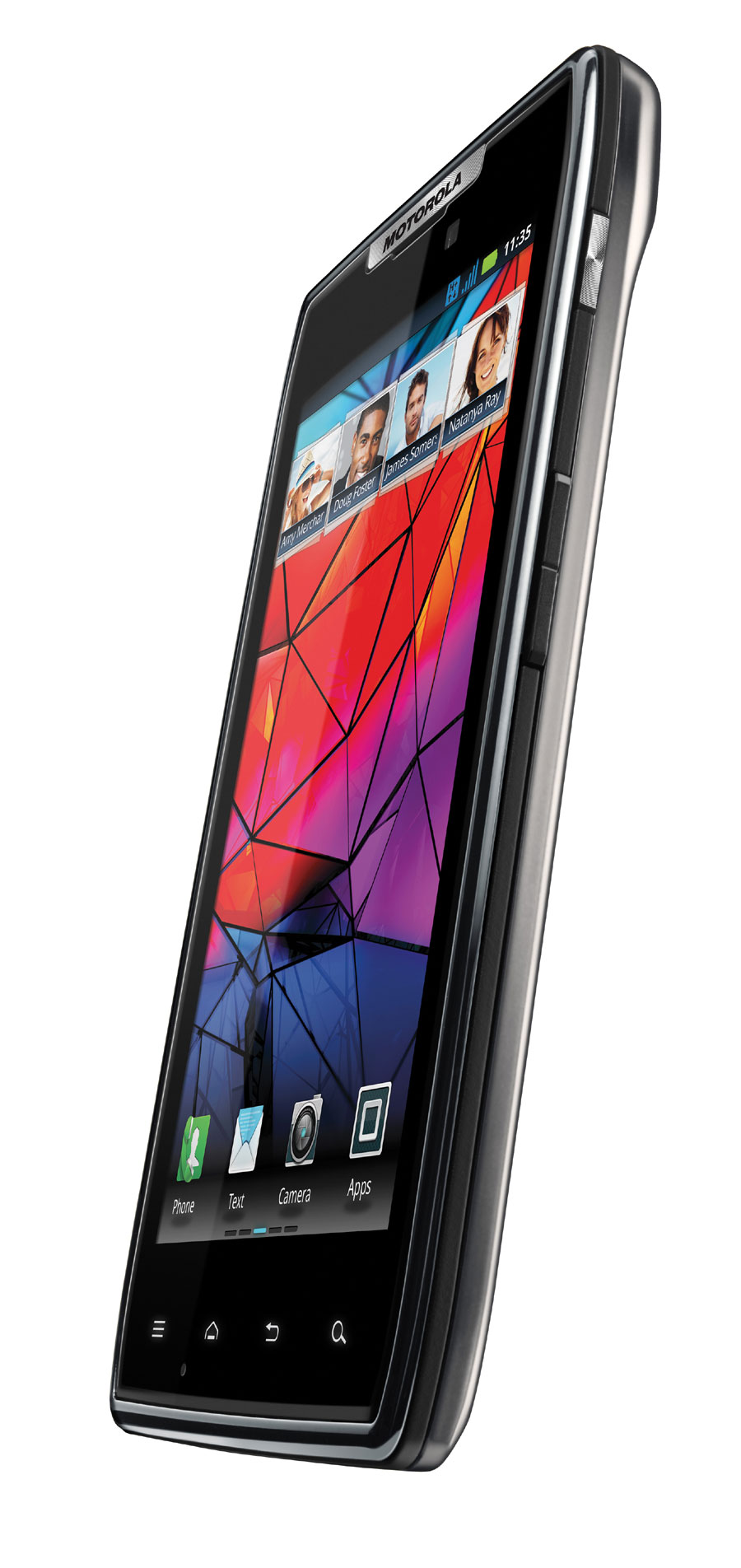
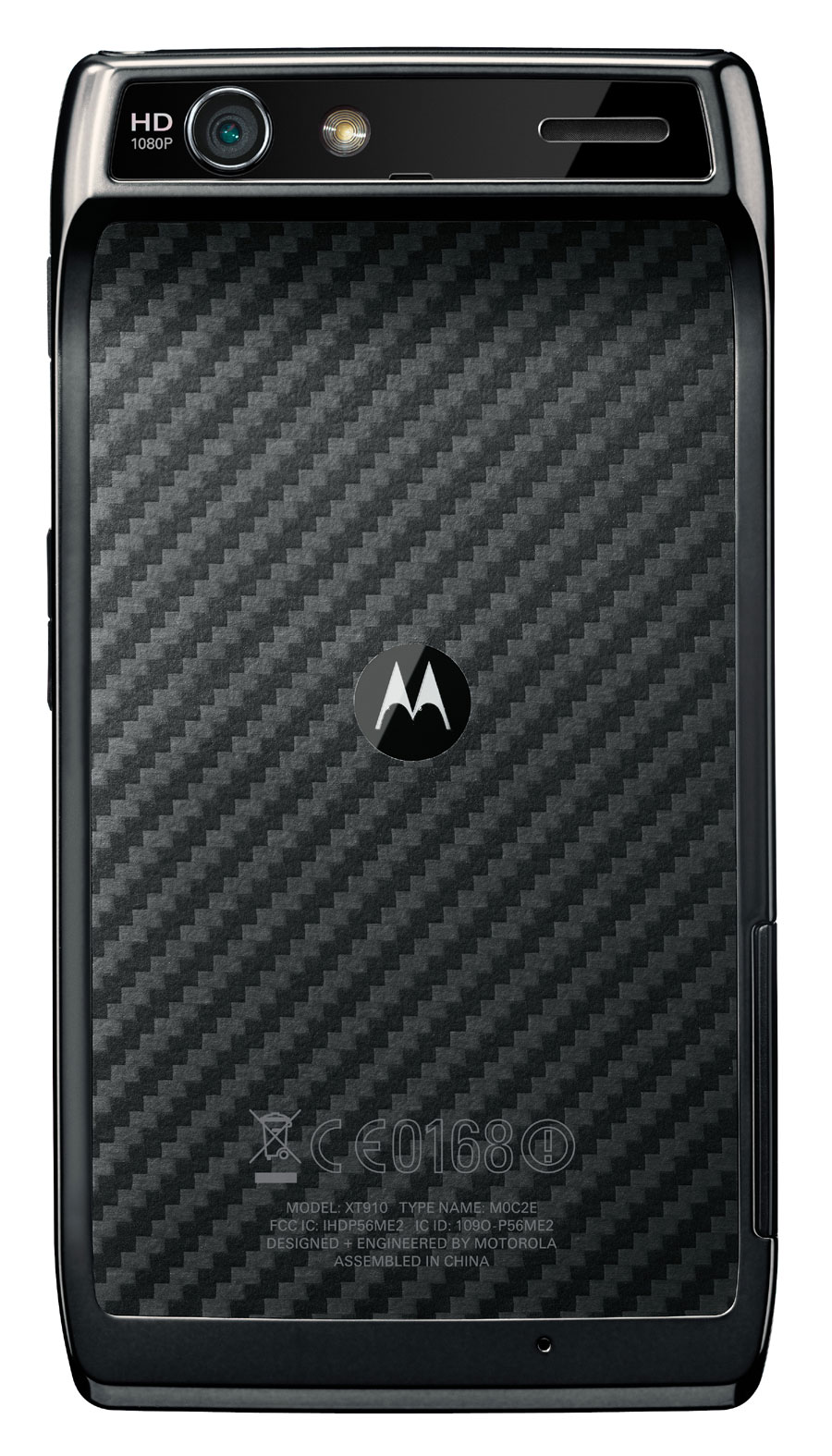
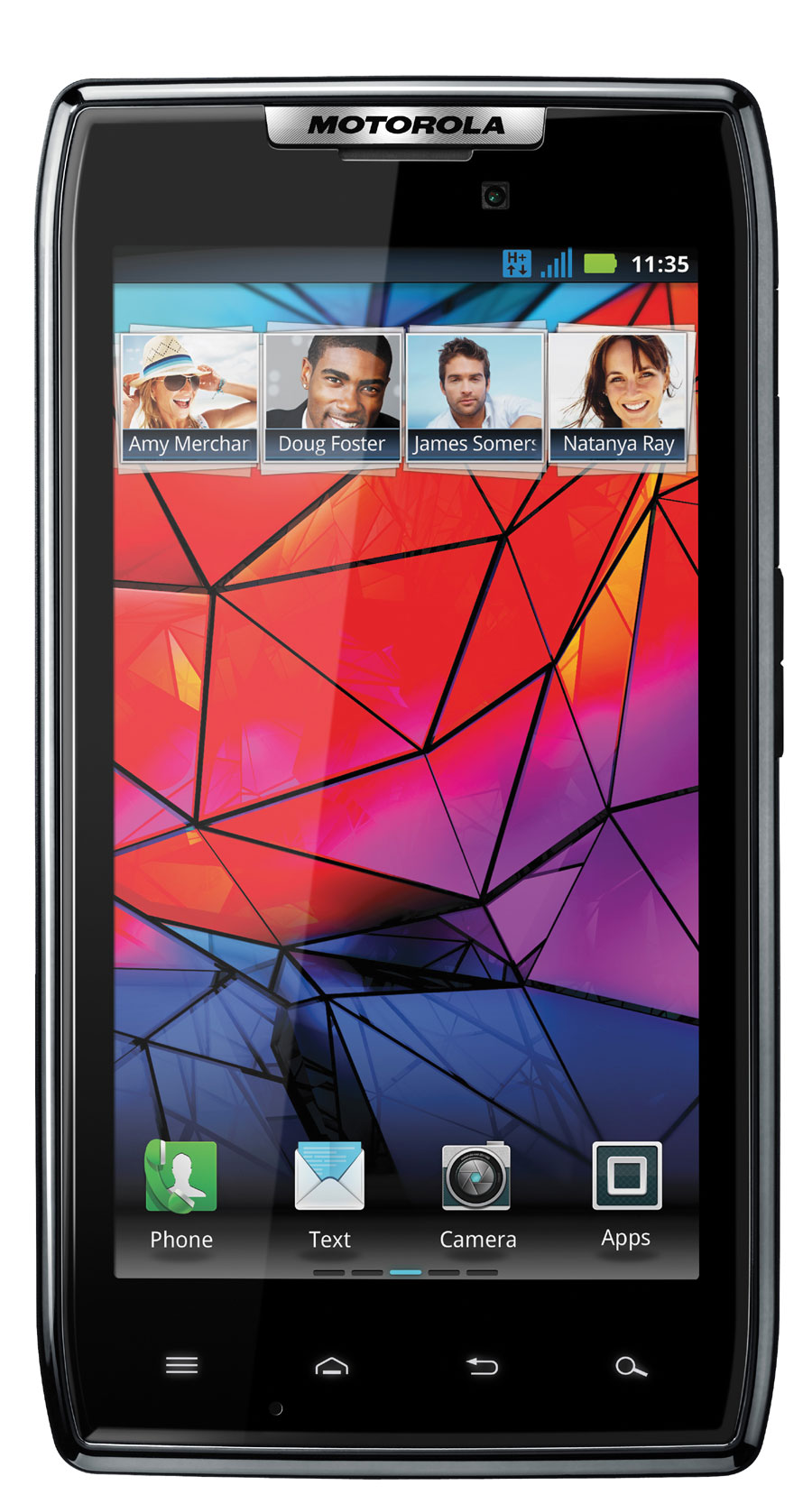
Motorola DROID RAZR
Motorola has just announced the Droid RAZR, a phone that the company calls “impossibly thin“. At 7.1mm thin, at its thinnest point, Motorola calls it the world’s thinnest phone. It features a 1.2GHz dual-core processor, 1GB of RAM. Its display is a 4.3″ Super-AMOLED with Gorilla glass that can be used to watch HD movies from Netflix. Motorola says that it is the first device that can download HD movies from Netflix.

Key features:
  • 1.2GHz dual-core processor
  • 1GB of RAM
  • 4.3” Super AMOLED display with Gorilla glass
  • Android Gingerbread 2.3.5
  • Measuring 7.1mm at its thinnest point
  • Stainless steel and kevlar design
  • 4G LTE connectivity
  • Able to watch HD Netflix movies
  • Government-graded encryption of emails, contacts and calendars
  • Compatible with Motorola’s Lapdock 500 Pro/Lapdock 100

The internal design is made of stainless steel and Kevlar, which ensures rigidity but at the same time, it weighs only 127g, which is more than the Galaxy S2, but less than the iPhone 4.
But hardware is only one side of the story says Motorola. On the software side, Motorola says that it has optimized the software that will improve battery live, and of course, Webtop from Motorola transform this thin smartphone into a small Linux computer.
Motocast is a cloud service for Motorola. With Motocast, users can stream music, download files/documents, which is something that business users will appreciate according to Motorola.

Finally, this is the thinnest 4G LTE phone in the world right now. It is as simple as that. At the moment, the 4G LTE network from Verizon is the fastest 4G network in America, and earlier devices suffered from being bulkier and had short battery life. The Droid RAZR has already changed the physical design difference. Now, we’re excited to see how good the battery life is going to be!

Wednesday, September 21, 2011

Tap-to-pay Google Wallet launched


Smartphones are in the process of replacing cameras, phonebooks, land lines and maps ... and wallets are next. First announced in May but just launched today, the Google Wallet free app allows its users to store electronic versions of their credit cards on their smartphone, and pay for items simply by tapping their phone on a near field communication (NFC) reader at a store's front counter.
A number of retailers, along with one financial institution and one carrier are on board, and so far Google Wallet is compatible with the Citi Master Card along with Google Prepaid Cards, that can be "loaded" using any existing credit card. Currently it only works with Google's Nexus S 4Gphone, on the Sprint network. Needless to say, the number of cards, devices and networks is expected to grow soon.
It can be put to use at merchants that display a MasterCard PayPass symbol at their till. Users simply enter their PIN on their phone, tap the device on the merchant's NFC reader, and the payment is electronically made. At some retailers, electronic coupons and loyalty points will also be passed along. Participating businesses can be found using the MasterCard PayPass Locator for Android app.
Special Google Offers will also be made available to users, and will automatically sync with their Wallet.
Down the road, Google would also like to see the Wallet containing things such as gift cards, tickets, boarding passes, and even electronic house keys. Google Wallet can be downloaded now, free of charge.
Other companies that have experimented with similar payment technology have included OrangeSIMlinkSAGEM, and Visa.

Thursday, August 18, 2011

Google to acquire Motorola Mobility for US$12.5 billion


Google has announced today that it is going to purchase Motorola Mobility for a price of US$40 per share, which adds up to a total amount of US$12.5 billion. Taking Google's patent wars into account, Motorola's portfolio of 17,000 patents could have been an important factor behind the deal. According to a blog post by Google's CEO Larry Page, Motorola will be run as a separate business, while Android will remain an open platform.

More than 150 million devices running Google's Android have been activated worldwide and this number is increased by 550,000 new devices every day, Larry Page says. While Motorola has been committed to the Android platform since 2008, with, for instance, the DROID line of smartphones, Larry Page calls the acquisition a "natural fit," adding that it's a way to improve the Android ecosystem and to enhance competition on the market.
The transaction, however, needs regulatory approvals from the U.S., the European Union, as well as Motorola Mobility's stockholders, and is expected to be closed by "the end of 2011 or early 2012," according to thepress release.
Motorola Mobility was formed in January 2011, after Motorola Inc. split into two companies. Motorola Solutions has been focused on enterprise-tailored solutions, while Motorola Mobility on cell phones and tablets. The company has certainly contributed to the development of the mobile industry in general, such as by having released the world's first portable cellular telephone and the StarTAC clamshell, and by being a founding member of the Open Handset Alliance.
According to a recent comScore report, in June 2011 Motorola was ranked as the third mobile OEM in the U.S., with 14.5 percent of mobile subscribers using its devices (smartphone and non-smartphone), behind LG and Samsung, while globally Motorola was ranked 7th in 2010, with just a 2.4 percent market share, according to Gartner.

Wednesday, February 2, 2011

Get some virtual culture with the Google Art Project


Take a virtual stroll through 17 of the world's most renowned museums, including MoMA, wit...
Google has announced a collaboration with 17 of the world’s most acclaimed art museums that lets people view over 1,000 high res artwork images and 17 "gigapixel" images while taking a virtual stroll through their galleries using “Street View” technology. While nothing can beat seeing a work of art in person, the Google Art Project could be the next best thing for those without the time and money to pop on a plane and trade elbows with crowds of tourists looking to catch a glimpse of what some of the best museums have on offer.
Google has spent the last 18 months working with museums including The Metropolitan Museum of Art and MoMA in New York, the National Gallery and Tate in London, The State Hermitage Museum in St Petersburg and Uffizi Gallery in Florence to capture super high resolution images of famous artworks. While many art museums already provide access to some of their collections online, Google Art Project is the first that allows virtual tourists to walk through the museum’s halls using Street View technology to see how the works are arranged.
To capture the 360 degree Street View images a specially designed trolley was taken through over 385 rooms within the museums. In addition to being viewed through the Google Art Project website, the gallery interiors can also be accessed directly within Street View in Google Maps.
As the user moves around the virtual galleries they can choose to go for a closer look on any of the 1,061 works of art captured in high resolution with the use of a custom built zoom viewer that Google says, “allows art-lovers to discover minute aspects of paintings they may never have seen up close before, such as the miniaturized people in the river of El Greco’s ‘View of Toledo’, or individual dots in Seurat’s ‘Grandcamp, Evening’.
Additionally, each of the 17 museums taking part in the project was asked to select one artwork to be photographed in super high "gigapixel" resolution. The resultant images each contain around 7 billion pixels, which enables viewers to study details fine details, such as the brushwork and patina, that can’t even be seen with the naked eye.
The site allows visitors to create their own personalized collection by saving specific views of any of the artworks. They can also add their own critiques to each painting, which can then be shared with friends and family. Google also sees this as an ideal tool for students or groups working on collaborative projects or collections.
“This initiative started as ‘20% project’ by a group of Googlers passionate about making art more accessible online. Together with our museum partners around the world we have created what we will hope will be a fascinating resource for art-lovers, students and casual museum goers alike - inspiring them to one day visit the real thing,” said Amit Sood, head of the project.
So if you’re looking to inject a touch of culture into your day, you can head on over to the Google Art Project to view artworks from the following museums:
  • Alte Nationalgalerie, Berlin - Germany
  • Freer Gallery of Art, Smithsonian, Washington DC - USA
  • The Frick Collection, NYC - USA
  • Gemäldegalerie, Berlin - Germany
  • The Metropolitan Museum of Art, NYC - USA
  • MoMA, The Museum of Modern Art, NYC - USA
  • Museo Reina Sofia, Madrid - Spain
  • Museo Thyssen - Bornemisza, Madrid - Spain
  • Museum Kampa, Prague - Czech Republic
  • National Gallery, London - UK
  • Palace of Versailles - France
  • Rijksmuseum, Amsterdam - The Netherlands
  • The State Hermitage Museum, St Petersburg - Russia
  • State Tretyakov Gallery, Moscow - Russia
  • Tate, London - UK
  • Uffizi Gallery, Florence - Italy
  • Van Gogh Museum, Amsterdam - The Netherlands